DISABILITY CIVILITY
Know Better. Do Better
Disability Civility was set up to improve the quality of daily interactions between disabled people and non-disabled people. In case you were wondering, that includes all of us.
This intrusive questioning leads to disabled people either having to explain their difference, or closing down the conversation they didn't want to have. Either way, the questioner puts the disabled person on the spot, having to make a choice whether to disclose personal or medical information that they don't want to and shouldn't have to.
Every day, visibly disabled people are asked personal questions, usually by complete strangers.
This often takes the form of the question 'What happened to you? '

The question might be well-meaning, but constantly being asked by strangers What happened to you? affects the mental health, wellbeing and confidence of disabled people.
Disability Civility will raise awareness in non-disabled people of the impact of these personal questions on disabled people
Increase communication confidence between non-disabled people and disabled people.
Improve the overall quality of daily interactions between non-disabled people and disabled people.
Create more disability allies in an ableist world.
What's Disability Civility All About?
Disability in the UK: What Do You Know?
End the Awkward: 5 awkward things to avoid doing when you meet a disabled person
What is ableism?
You're probably an ableist, but...
Casual Ableist Language
The 10 Disability Myths on an Instagram story
The 10 Disability Myths as slides
Questioning visibly disabled people
What happened to you?
Questions to disabled people - the impact
Reject inspiration 'porn' and pity 'parties'
Some concrete steps to take to be a Disability Ally with confidence
For workplaces, shops and venues
Thank you for your time
Taking the Disability Civility course allows participants the space to understand some of the societal root causes of the discrimination disabled people still face.
Most people don’t want to discriminate against disabled people, but taking the course will show how many of us still do. The course is a safe, non-judgmental place to explore individual attitudes to disability and understand where they came from.
Diversity and inclusion expertise tells us that the majority of non-disabled people do not want to discriminate against disabled people. Research shows that disabled people report still feel excluded in many ways. This course aims to close that gap with concrete actions that participants can take.

Disability Civility works on an allyship model. Participants will be able to join a free network to continue learning and connect with others working towards a more inclusive world.
For every paid place on the course, we are able to offer a reduced fee place to volunteers and individuals.
The inception of Disability Civility was supported by The National Lottery Community Fund. The e-learning development was generously funded by Tyk.
As a Community Interest Company any profit generated is put back into the disabled community for its benefit.
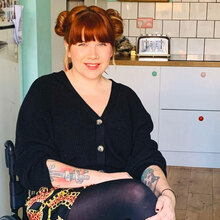
Nina Tame
Nina Tame was born with Spina Bifida lipomyelomeningocele which is basically a complicated term for saying that her spinal cord never developed properly and she now has damaged nerves in her legs and feet. Over the years her mobility has decreased and she now uses a wheelchair a lot of the time which she thinks is pretty great as she can zoom around with ease but not so great when people constantly ask her "What happened to you?!
Nina is a disabled activist and influencer. In June 2020 she took part in #SharetheMicNow a global social media campaign featuring black women sharing their experiences on the Instagram accounts of white women in Hollywood.

Jessica Russell
Jessica Russell is an educator and a writer. She is a Fellow of the Royal Society of Arts and the Further Education Trust for Leadership. She is an associate mental health researcher at the National Institute for Health Research.
Jessica has no visible disabilities but was diagnosed with bipolar disorder over 20 years ago and now identifies as neurodiverse. She suspects she has ADHD and ASD but can't be bothered to go through the lengthy diagnostic processes now, mainly because she has learned her workaround strategies already. She also has a life-limiting chronic lung condition. No-one says "What happened to you?" to her, but sometimes she discloses her bipolar diagnosis and the room goes weird.
So have we. Aren’t they boring? This course is about the real experience of disabled people and little things that we all can do to make a big impact. This isn’t about blah blah blah it’s about being the best ally you can be at work and at home. It’s really important work for individuals and organisations.
Have you ever said something is lame? Have you ever parked in a disabled car parking bay? Or parked your car up on the pavement? Do you prefer your representation of disabled people in the media to be when they are making your laugh or ‘inspiring’ you with their ‘bravery’ or achievements?
Many of us don’t think that we discriminate but because of the culture we were raised in, we accidentally might.
This course has been designed by disabled people for everybody, including disabled people. We know that society has consistently represented disabled people in a negative light and that this affects disabled people too. The course can provide insights into some of those troubling aspects of society’s views of disabilities as well as providing a network of people who are working to improve things. You might be surprised to find that even as a disabled person you may have an inner ableist.
You probably do, If they have an invisible disability maybe they just don’t feel comfortable to say so. Even if you really don’t, you will come across disabled people all the time, whether it’s through work, or when you go out or on the internet.
Disabled people have worse mental health, are more excluded and less considered than any other section of society. So-called accessible venues are often anything but. Disabled people are treated as less than equal in an able-bodied society every day. If you think this course isn’t needed, you really need this course.
Supported by: